

Introduction
Modern industrial facilities depend on accurate process control, dependable equipment, and efficient automation to maintain consistent production. From manufacturing plants and power stations to chemical processing facilities and water-treatment systems, controlling the movement of liquids, gases, steam, and other process media is essential. This is where Flow Control Solutions become important. They help industries regulate pressure, temperature, volume, and direction while supporting safe and efficient operations. At the same time, Industrial Automation Solutions allow businesses to monitor and control processes with greater accuracy and less manual intervention. Control valves form an important connection between these two areas because they physically regulate process flow according to signals from control systems.
A reliable Control Valve Manufacturer understands that every industrial process has different requirements. Valve size, pressure rating, temperature, material compatibility, actuator type, and control accuracy can all influence the selection of equipment. Properly engineered solutions can improve process stability, reduce energy consumption, minimize maintenance requirements, and support long-term operational reliability. As industries continue adopting smarter technologies, integrated flow control and automation are becoming increasingly important for modern production environments.
Understanding Flow Control Solutions
Flow Control Solutions include a wide range of technologies, equipment, and engineering practices designed to regulate the movement of fluids and gases throughout an industrial process. Depending on the application, flow may need to be started, stopped, reduced, increased, diverted, or precisely controlled. The equipment used for these purposes may include control valves, isolation valves, actuators, pumps, sensors, pressure regulators, and associated control systems.
Effective flow management helps maintain stable process conditions. For example, a manufacturing process may require a specific amount of liquid to enter a production vessel at a controlled pressure. Similarly, a power plant may need precise steam regulation to maintain efficient turbine operation. In water-treatment facilities, accurate flow management can influence chemical dosing and treatment performance.
A well-designed Flow Control Solutions approach considers the entire process rather than focusing on a single component. Engineers evaluate the characteristics of the medium, operating pressure, temperature, flow rate, pipeline dimensions, and required response time. This broader approach can help ensure that each component works effectively as part of the overall system.
Importance of Industrial Automation
Automation has changed the way industrial processes are monitored and controlled. Industrial Automation Solutions combine instruments, sensors, controllers, actuators, software, and communication systems to perform process functions with limited manual intervention. These technologies can continuously collect operating information and allow control systems to respond to changing process conditions.
In a conventional system, an operator may need to manually adjust valves or monitor gauges. An automated system can instead receive information from sensors and send commands to actuators based on programmed control logic. This can improve response times and provide more consistent process management.
Modern Industrial Automation Solutions can also support centralized monitoring. Operators can view important process parameters from control rooms and identify abnormal conditions more quickly. Depending on the system architecture, automation can be integrated with distributed control systems, programmable logic controllers, supervisory systems, and industrial communication networks.
Automation does not simply reduce manual work. It can also help organizations improve repeatability, process visibility, production efficiency, and equipment utilization. When properly designed, automation provides a foundation for more reliable and data-driven industrial operations.
Role of a Control Valve Manufacturer
A Control Valve Manufacturer plays an important role in designing equipment that regulates process flow according to specific operating requirements. Control valves are different from simple isolation valves because they are designed to adjust flow continuously or in defined increments. They can respond to signals from controllers and help maintain desired process variables.
The design of a control valve depends on several technical parameters. Engineers may consider flow coefficient, pressure drop, fluid properties, temperature, valve size, leakage requirements, and actuator force. The selected valve must also be compatible with the process medium and operating environment.
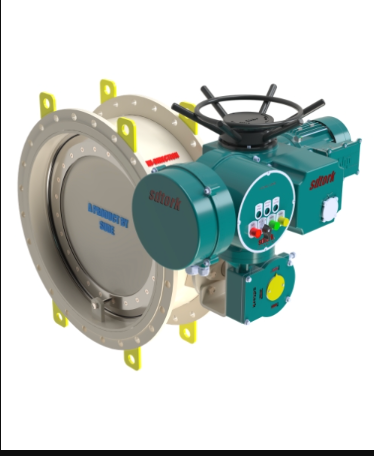
A professional Control Valve Manufacturer can provide different valve configurations for different industrial applications. Depending on process requirements, solutions may include globe valves, rotary valves, pneumatic control valves, electric-actuated valves, or specialized designs. Proper sizing is especially important because an incorrectly sized valve may operate inefficiently or provide insufficient control.
Manufacturers may also provide customized valve assemblies that include actuators, positioners, feedback devices, and accessories. This makes it easier to integrate the valve into an automated process-control system.
How Flow Control and Automation Work Together
The relationship between Flow Control Solutions and automation is particularly important in modern plants. A control valve performs the physical adjustment, while sensors and controllers determine when and how that adjustment should occur.
For example, consider a process where liquid must remain at a particular flow rate. A flow sensor measures the actual flow and sends information to a controller. The controller compares the measurement with the desired set point. If the flow is too low, the control system can instruct the valve actuator to open further. If the flow is too high, the valve can move toward a more closed position.
This continuous feedback process creates a closed-loop control system. It can maintain stable operating conditions even when process demands change. Such systems are widely used in heating, cooling, pressure control, chemical dosing, steam management, and fluid transportation.
When Flow Control Solutions are properly integrated with automation technologies, industries can achieve more precise process regulation. This integration can also help reduce fluctuations and improve product consistency.
Applications Across Industrial Sectors
Flow-control and automation technologies are used in numerous industries. Power-generation facilities rely on valves and automated systems to regulate steam, cooling water, fuel, and other process fluids. Chemical plants use precise flow management to maintain reaction conditions and safely handle different substances.
Oil and gas facilities also require dependable control equipment for processing, transportation, and storage applications. Food and beverage plants use automated flow systems for water, ingredients, cleaning solutions, and temperature-controlled processes. Pharmaceutical manufacturing requires highly controlled processes where accuracy, repeatability, and equipment compatibility are particularly important.
Water and wastewater treatment facilities use automated valves and instrumentation to control water movement, chemical dosing, filtration, and treatment stages. Manufacturing plants can use automation to coordinate multiple production processes and improve operational efficiency.
In each of these environments, Industrial Automation Solutions can be adapted according to production requirements. The appropriate combination of sensors, controllers, valves, and actuators can help create an integrated system capable of responding to changing operating conditions.
Key Components of an Automated Flow Control System
An automated flow-control system typically consists of several interconnected components. Sensors measure process conditions such as flow, pressure, temperature, and level. Controllers analyze this information and determine the appropriate corrective action. Actuators then convert control signals into mechanical movement.
Control valves are frequently the final control elements in these systems. They physically change the process flow based on instructions from the controller. Positioners may be used to improve valve positioning accuracy, while communication interfaces can enable monitoring and diagnostics.
The quality of each component affects overall system performance. Even an advanced controller cannot compensate effectively for an incorrectly selected valve or poorly configured actuator. This is why cooperation between system designers and a qualified Control Valve Manufacturer can be valuable during project planning.
Benefits of Modern Automation and Flow Control
Properly engineered Industrial Automation Solutions can provide several benefits to industrial organizations. Improved process consistency is one of the most important advantages because automated systems can respond quickly to changes and maintain defined operating parameters.
Automation can also reduce unnecessary manual intervention. Operators can monitor multiple process variables from centralized interfaces rather than physically checking every valve and instrument. This can improve productivity while allowing personnel to focus on higher-value operational activities.
Efficient Flow Control Solutions can contribute to energy savings as well. Accurate regulation prevents excessive flow and helps equipment operate closer to desired conditions. In heating and cooling systems, for example, precise control can reduce unnecessary energy use.
Another advantage is improved process safety. Automated systems can detect abnormal pressure, temperature, or flow conditions and initiate programmed responses. Depending on the system design, protective actions may include closing valves, reducing flow, or initiating alarms.
Selecting the Right Control Valve
Choosing the correct control valve requires careful consideration of the application. Valve size alone should never be the only selection factor. Engineers should evaluate flow rate, pressure drop, temperature, fluid properties, valve characteristics, and required control range.
The actuator must also be appropriately sized. Pneumatic actuators are commonly used in many industrial environments because they can provide reliable movement and fast response. Electric actuators may be preferred where electrical control and positioning requirements are important.
Material selection is another critical consideration. Valve bodies, trims, seats, and seals must be compatible with the process medium. Aggressive or corrosive fluids may require specialized materials to maintain equipment durability.
An experienced Control Valve Manufacturer can assist with technical selection and configuration. Proper engineering at the beginning of a project can help reduce future maintenance and performance problems.
Maintenance and Reliability
Even advanced Flow Control Solutions require proper maintenance. Regular inspections can help identify issues such as seal degradation, actuator problems, abnormal vibration, leakage, or valve-positioning errors. Preventive maintenance is generally more effective than waiting for equipment failure.
Automation systems should also be monitored to ensure that sensors remain calibrated and communication between components remains reliable. Incorrect sensor readings can cause control valves to respond unnecessarily or incorrectly.
Manufacturers can support reliability by providing equipment designed for accessible maintenance and by offering appropriate replacement components. Documentation, installation guidance, and technical support can also make a significant difference in long-term performance.
Choosing Industrial Automation Solutions
Organizations evaluating Industrial Automation Solutions should first identify the processes that need automation and the level of control required. Some applications may only require automated valve operation, while others may need complete process monitoring and closed-loop control.
Scalability should also be considered. A system designed only for current requirements may become restrictive if production expands later. Modular automation architectures can make future upgrades easier.
Compatibility between valves, sensors, controllers, communication systems, and software is equally important. A coordinated design can help prevent integration problems and improve system reliability.
Working with experienced automation engineers and a capable Control Valve Manufacturer can help organizations develop a solution that matches both current and future operational requirements.
Future of Flow Control and Industrial Automation
Industrial control technology continues to evolve with improvements in sensors, communication systems, analytics, and intelligent automation. Modern facilities are increasingly interested in collecting operational data and using it to improve maintenance, energy efficiency, and production planning.
Smart valve positioners and connected instruments can provide additional information about equipment condition and operating performance. This information can help maintenance teams identify potential problems before they cause significant downtime.
The future of Flow Control Solutions is therefore likely to involve greater connectivity and integration. Instead of treating valves, instruments, and controllers as separate components, industries are increasingly viewing them as parts of a connected process-control ecosystem.
Conclusion
Reliable flow management and automation are essential for modern industrial operations. From controlling liquids and gases to maintaining pressure, temperature, and production conditions, properly designed systems can improve efficiency and operational consistency. Flow Control Solutions provide the equipment and engineering needed to regulate process media, while Industrial Automation Solutions bring monitoring, control, and intelligent response capabilities to industrial facilities.
Control valves remain a critical part of this combination because they provide the physical means of adjusting process flow. Selecting equipment from an experienced Control Valve Manufacturer can help industries obtain valves that are correctly sized, appropriately constructed, and suitable for their operating environment. As automation continues to develop, the integration of accurate flow control, advanced instrumentation, and intelligent control systems will become increasingly important for industries seeking reliable, efficient, and adaptable operations.