

Introduction
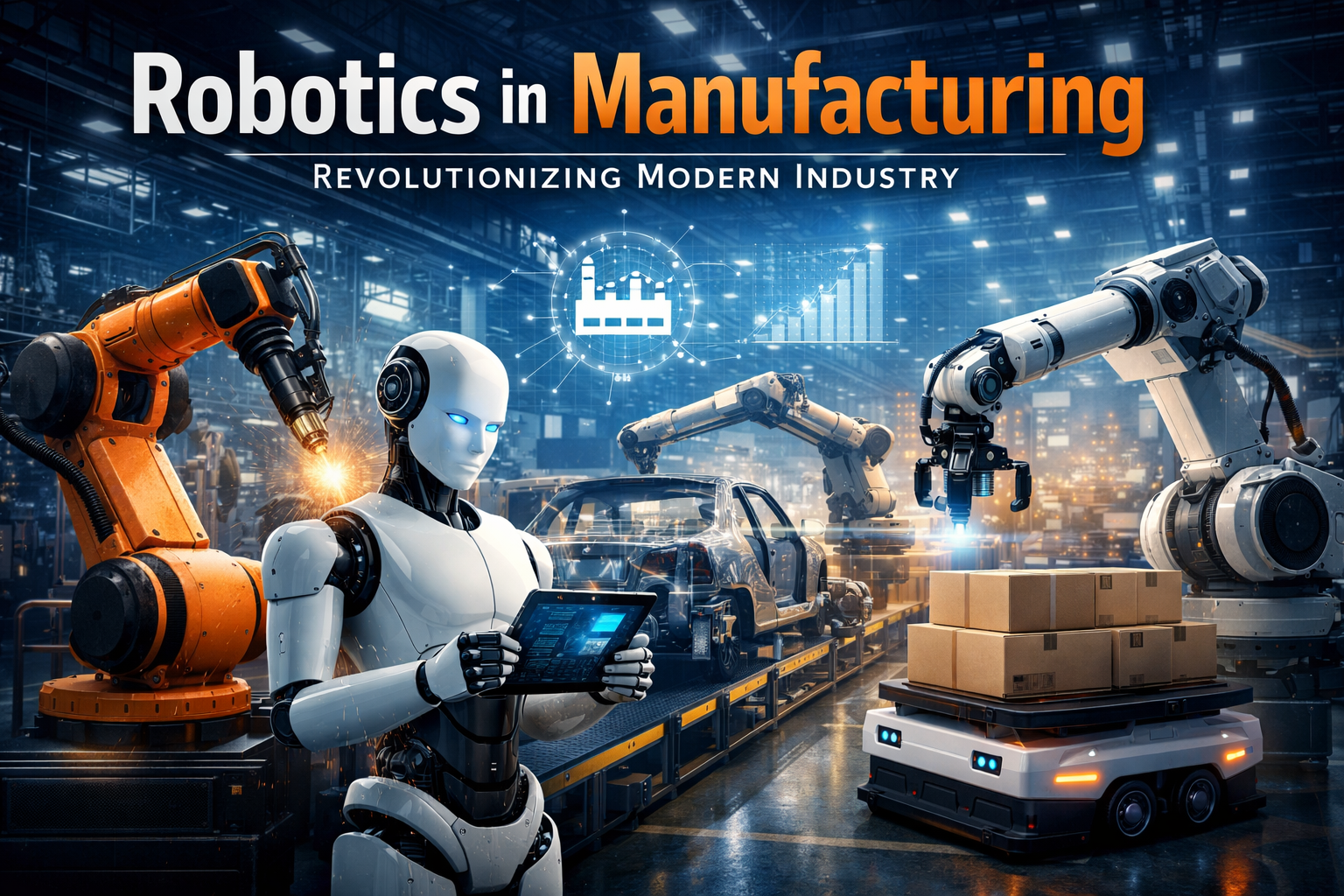
In the modern industrial era, robotics in manufacturing has emerged as a revolutionary force. From streamlining production processes to enhancing precision, robots are no longer confined to science fiction—they are integral to everyday manufacturing operations. The adoption of robotics in manufacturing has reshaped how factories operate, offering unprecedented levels of efficiency, quality control, and workplace safety.
This article delves deep into the applications, benefits, and future trends of robotics in manufacturing, providing a comprehensive guide for industry professionals and enthusiasts alike.
What is Robotics in Manufacturing?
Robotics in manufacturing refers to the deployment of automated robots in production environments to perform tasks traditionally handled by humans. These robots are equipped with sensors, artificial intelligence, and machine learning capabilities, enabling them to execute repetitive, complex, or hazardous tasks with accuracy and efficiency.
Key functions of manufacturing robots include:
- Assembly operations
- Material handling
- Welding and painting
- Quality inspection
- Packaging and palletizing
Robotics in manufacturing is not just about replacing human labor but enhancing it. By automating routine or dangerous processes, companies can focus on innovation and problem-solving.
The Benefits of Robotics in Manufacturing
Implementing robotics in manufacturing offers numerous advantages for modern industries. Below are some of the most significant benefits:
- Increased Productivity: Robots operate continuously without fatigue, allowing for higher output levels.
- Precision and Consistency: Automation ensures uniform quality in repetitive tasks.
- Reduced Operational Costs: Over time, robotics can lower labor and production expenses.
- Enhanced Safety: Robots take over dangerous tasks, minimizing workplace accidents.
- Flexibility: Modern robots can be reprogrammed for different production lines, adapting to changing needs.
Table 1: Key Benefits of Robotics in Manufacturing
| Benefit | Description |
|---|---|
| Increased Productivity | Robots operate 24/7 without breaks, boosting overall output. |
| Precision and Consistency | Advanced sensors ensure minimal errors in assembly and processing. |
| Reduced Operational Costs | Less reliance on human labor and decreased wastage lower expenses. |
| Enhanced Safety | Robots handle hazardous tasks, protecting human workers. |
| Flexibility | Reprogrammable robots adapt to various production lines and tasks. |
Types of Robots Used in Manufacturing
Understanding the types of robots used in manufacturing helps to grasp their wide-ranging applications. Here are the main categories:
- Articulated Robots: Multi-jointed arms for tasks like welding and painting.
- SCARA Robots: Ideal for pick-and-place tasks, offering high-speed precision.
- Delta Robots: Lightweight, fast robots commonly used for packaging and sorting.
- Collaborative Robots (Cobots): Work safely alongside humans in shared spaces.
- Autonomous Mobile Robots (AMRs): Move materials efficiently across factory floors.
Each type plays a critical role in improving efficiency and accuracy in robotics in manufacturing.
Applications of Robotics in Manufacturing
The applications of robotics in manufacturing are vast and continuously expanding:
1. Assembly Line Automation
Robots streamline assembly lines by performing repetitive tasks such as screwing, welding, or component placement. This increases efficiency and ensures uniformity across products.
2. Material Handling
Robots transport raw materials and finished products across the factory floor, reducing human labor and minimizing errors in inventory management.
3. Welding and Painting
Robotic arms provide precision in welding and painting, resulting in higher quality finishes and reduced material waste.
4. Quality Control and Inspection
Equipped with cameras and sensors, robots detect defects in products faster and more accurately than human inspection.
5. Packaging and Palletizing
Robots efficiently pack and organize products for shipping, optimizing space and reducing handling time.
Table 2: Applications of Robotics in Manufacturing
| Application | Robot Type Used | Benefit |
|---|---|---|
| Assembly Line Automation | Articulated Robots | Improved efficiency and consistency |
| Material Handling | Autonomous Mobile Robots (AMRs) | Faster transportation and reduced labor cost |
| Welding and Painting | Articulated Robots | Precision work and reduced waste |
| Quality Control & Inspection | Vision-equipped Cobots | High accuracy and defect detection |
| Packaging & Palletizing | Delta Robots | Optimized packing and faster processing |
Robotics and Industry 4.0
The integration of robotics in manufacturing is a cornerstone of Industry 4.0. Industry 4.0 represents the rise of smart factories, where interconnected systems, artificial intelligence, and robotics collaborate seamlessly.
Key Industry 4.0 features include:
- IoT-enabled robots for real-time data monitoring
- Predictive maintenance using AI algorithms
- Smart supply chains with automated logistics
- Digital twins for simulating production processes
Robotics in manufacturing allows companies to achieve higher levels of automation and data-driven decision-making, transforming traditional factories into intelligent production ecosystems.
Challenges of Implementing Robotics in Manufacturing
Despite the benefits, deploying robotics in manufacturing comes with challenges:
- High Initial Investment: Robots require substantial upfront costs.
- Workforce Training: Employees need skills to operate and maintain robots.
- Integration Complexity: Adapting robots to existing systems can be difficult.
- Maintenance and Downtime: Regular upkeep is essential to avoid production delays.
By addressing these challenges strategically, companies can maximize the long-term advantages of robotics in manufacturing.
The Future of Robotics in Manufacturing
The future of robotics in manufacturing is promising, driven by ongoing technological advancements:
- AI-powered Robots: Smarter robots capable of decision-making and adaptive learning.
- Collaborative Cobots: Greater human-robot collaboration for more flexible production.
- Advanced Sensors: Improved precision and real-time monitoring of operations.
-
Sustainable Manufacturing: Robots reducing waste and optimizing energy consumption.
As robotics technology continues to evolve, manufacturers who adopt these innovations will gain a competitive edge.
5 Key Takeaways
- Robotics improves productivity, quality, and workplace safety.
- Multiple robot types cater to different manufacturing tasks.
- Applications range from assembly to quality inspection.
- Industry 4.0 leverages robotics for smarter, connected factories.
- Challenges include cost, workforce adaptation, and system integration.
Social Sharing
Discover how robotics in manufacturing boosts efficiency, ensures precision, and revolutionizes modern factories with AI-driven automation.
Explore robotics in manufacturing and see how smart robots enhance productivity, safety, and quality in today’s industrial landscape.
Robotics in manufacturing is reshaping production. Learn about types, applications, and benefits of robots in modern factories.
In conclusion
robotics in manufacturing is transforming industries by increasing efficiency, reducing costs, and improving safety. From assembly lines to quality inspections, robots play a critical role in modern production. As technology evolves, robotics will continue to redefine manufacturing, making smart factories the standard for the future.
By strategically adopting these solutions, companies can harness the full potential of robotics, stay competitive, and prepare for the next wave of industrial innovation.
Read More:- Big Data Analytics Services for Smarter Business Insights